MARBLES research showcased at European Conference of Marine Natural Products 2025
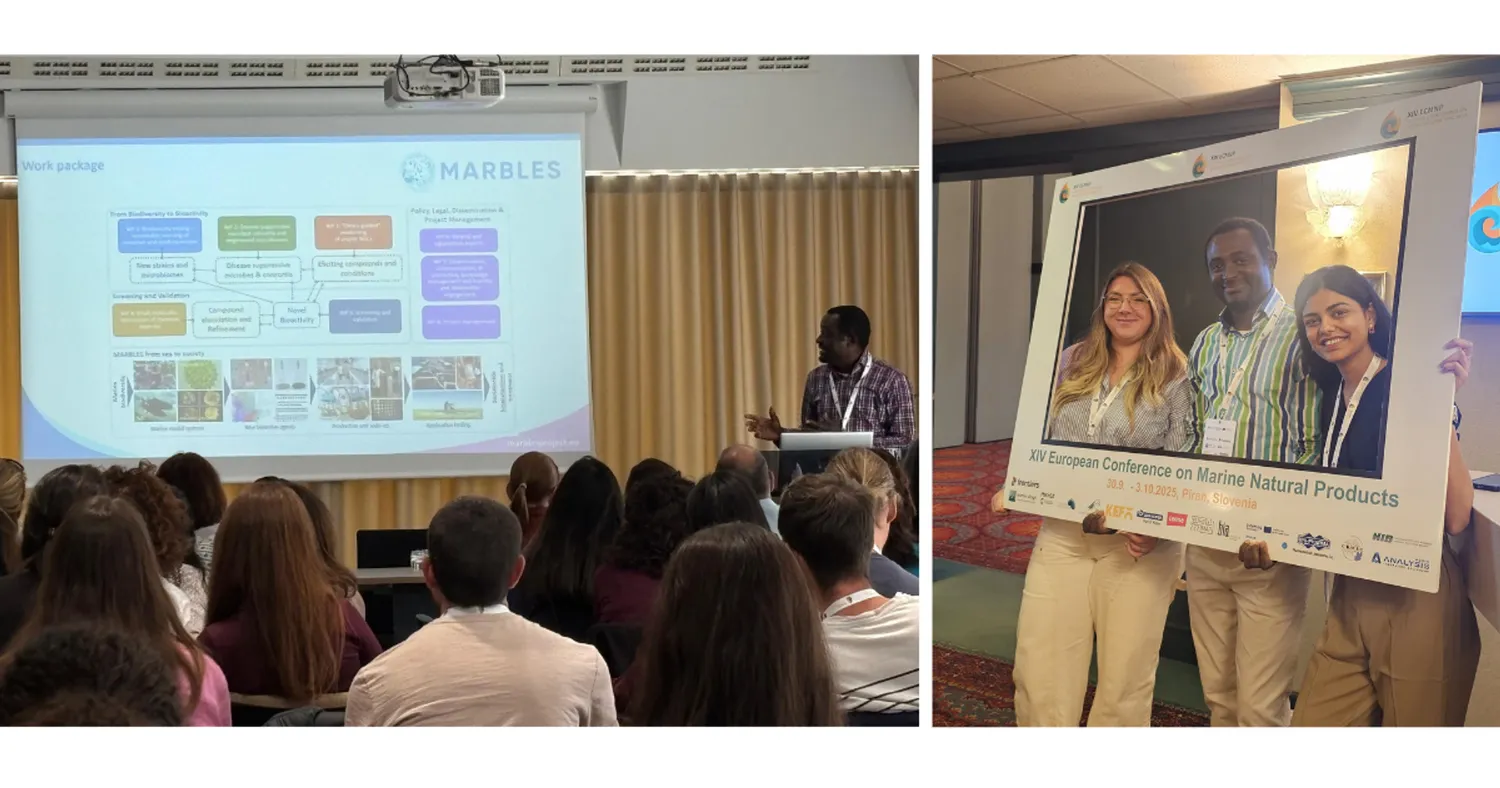
From 29 September to 3 October 2025, the picturesque coastal town of Piran, Slovenia, hosted the European Conference of Marine Natural Products (ECMNP). ECMNP is a leading forum for scientists exploring the chemical diversity of marine organisms. The conference brought together researchers from across Europe and beyond to share cutting-edge discoveries in marine biotechnology, natural product chemistry and sustainable exploitation of ocean resources.
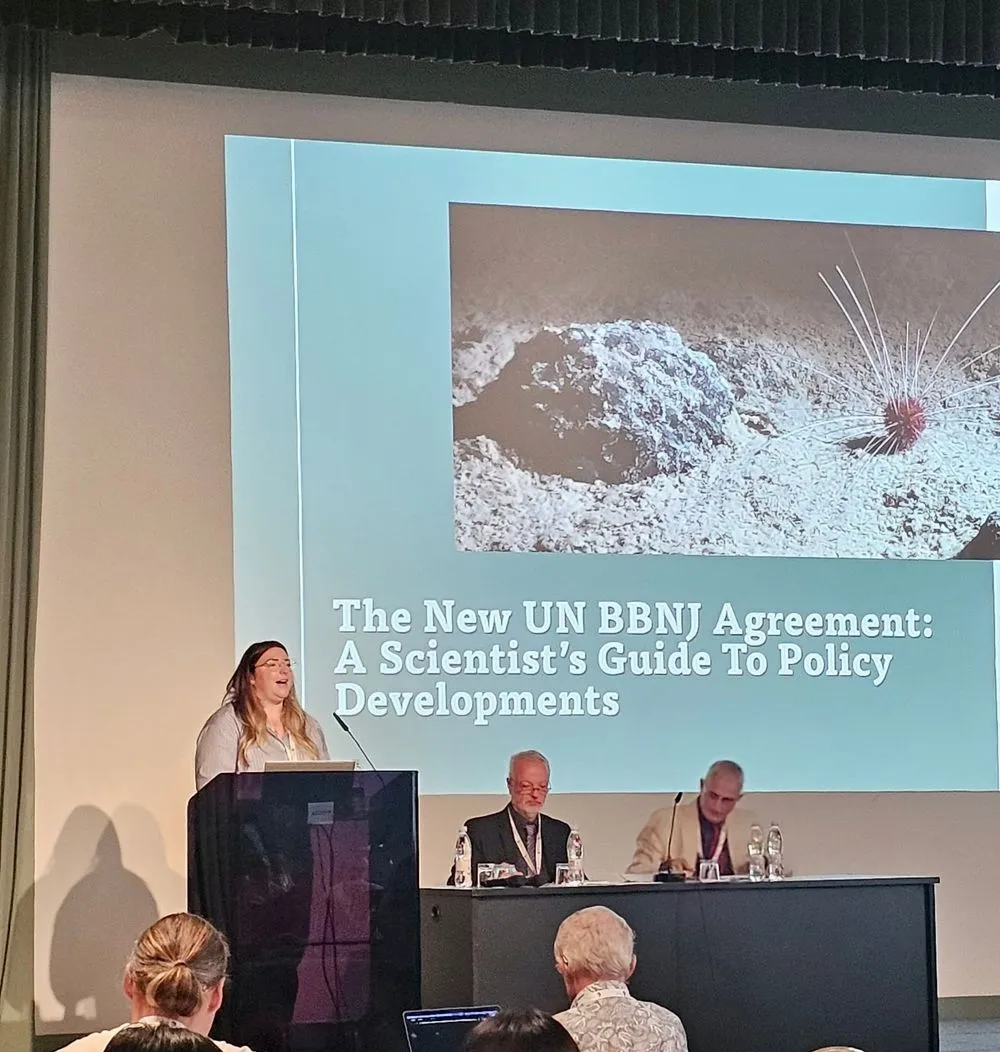
The MARBLES project was proudly represented by Federica Casolari from the University of Aberdeen (UNIABDN), who was an invited keynote speaker. Her interactive presentation was titled "The new UN BBNJ Agreement: A Scientist's Guide To Policy Developments" and provided a practical overview of the UN Agreement on the Conservation and Sustainable Use of Marine Biological Diversity of Areas Beyond National Jurisdiction (BBNJ), a landmark treaty adopted in 2023 to protect biodiversity in the high seas. Federica’s talk focused on bridging the gap between policy and science, offering researchers clear guidance on new obligations related to marine genetic resources (MGR) and digital sequence information (DSI) under international frameworks. The interactive format encouraged dialogue on:
- How the BBNJ Agreement impacts marine natural product research
- Compliance strategies for scientists working with MGR
- Opportunities for collaboration between science and policy to ensure sustainable ocean innovation
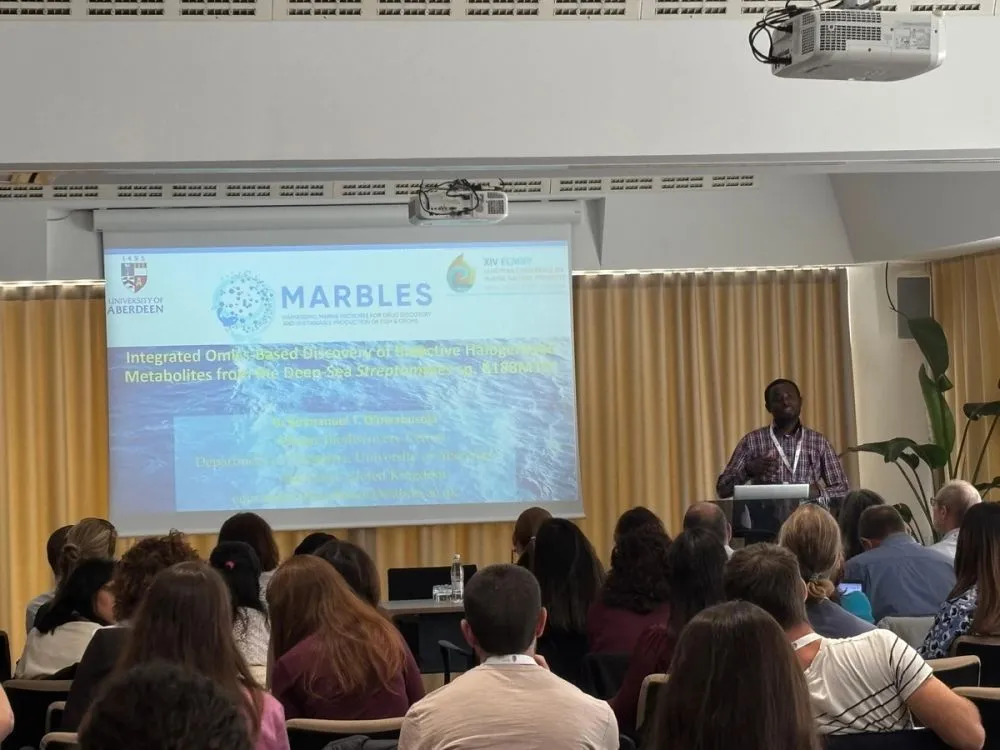
Also proudly representing MARBLES was Emmanuel Oluwabusola from UNIABDN, who delivered a fascinating presentation titled “Integrated Omics-Based Discovery of Bioactive Halogenated Metabolites from the Deep-Sea Streptomyces B188M101.”
Emmanuel's talk highlighted how multi-omics approaches (combining genomics, transcriptomics and metabolomics), can accelerate the discovery of novel bioactive compounds from deep-sea microorganisms. Using advanced analytical techniques such as Liquid Chromatography–Tandem Mass Spectrometry (LC-MS/MS) and Nuclear Magnetic Resonance spectroscopy (NMR), the team identified unique halogenated metabolites with promising antimicrobial properties. These findings underscore the immense potential of deep-sea actinomycetes like Streptomyces as sources of new pharmaceutical drugs and demonstrate the innovative strategies the MARBLES team are employing to unlock marine biodiversity for applications in agriculture, aquaculture and human health. Many clinically important drugs such as streptomycin (antibiotic produced by the bacterium Streptomyces griseus) and erythromycin (antibiotic produced by the bacterium Saccharopolyspora erythraea) originated from terrestrial bacteria, and marine strains are now being explored for new chemical diversity.
The ECMNP is a biennial event that serves as a hub for collaboration among marine chemists, biologists and biotechnologists. This year’s programme featured sessions on marine metabolomics, biosynthetic pathways and sustainable bioprospecting, fostering dialogue on how marine natural products can contribute to medicine, industry and environmental stewardship.